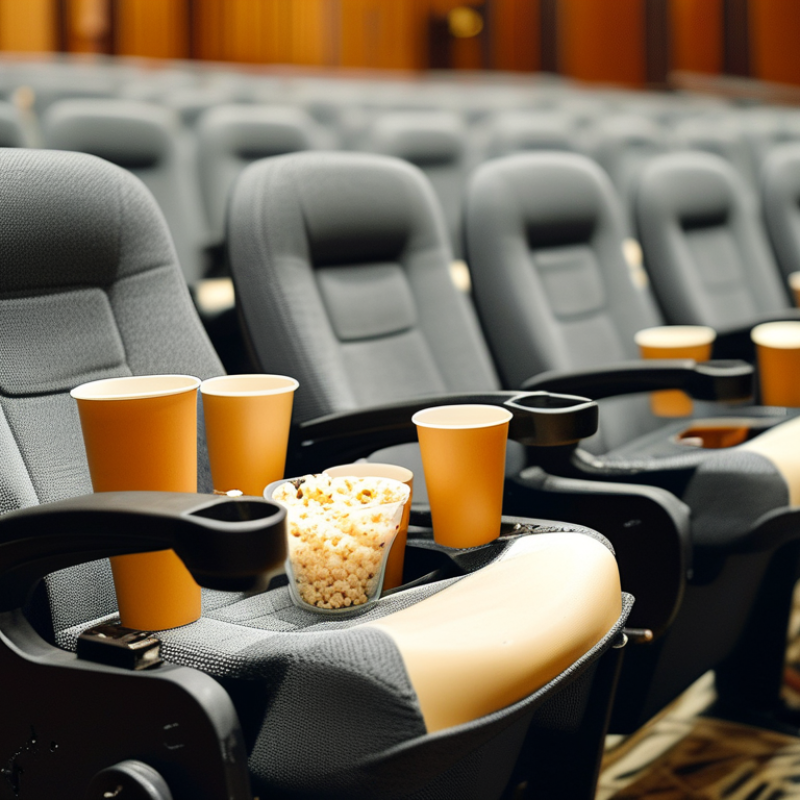
Theater chair cup holders look like small accessories, yet they can influence an entire seating project. In 2026, buyers may compare a basic molded holder with a premium stainless-steel model and notice a surprising price gap. That raises a common question: why are theater chairs with cup holders so expensive? The answer usually involves more than the holder itself. Frame construction, upholstery, fire-performance requirements, installation labor, shipping volume, and long-term warranty support all affect the final cost.
A reliable evaluation begins with real use conditions. Imagine a busy auditorium where hundreds of visitors place cold drinks, popcorn containers, and phones beside them each evening. The cup holder must resist spills, repeated impact, loose fittings, and difficult cleaning. Some models use reinforced polymers. Others include removable inserts, metal supports, or concealed mounting hardware. These details increase production and maintenance costs. They may also improve visitor comfort and reduce replacement work.
Still, price does not automatically prove quality. A higher quote can include valuable testing and service, but it can also hide unnecessary features. That is where careful supplier questions matter. Ask about material specifications, load testing, replacement parts, installation methods, and warranty exclusions. Request samples when possible. A sample can reveal sharp edges, weak hinges, or awkward spacing quickly. My assessment may not fit every venue, because climate, seating density, and cleaning routines vary. However, a transparent cost review helps theater owners separate useful durability from expensive decoration. The following discussion examines these cost drivers in practical detail.
What Determines Theater Chair Cup Holder Costs in 2026
How to Understand Theater Chair Cup Holder Costs in 2026?
What Determines Theater Chair Cup Holder Costs in 2026
Theater chair cup holder costs in 2026 depend on material, design, installation, and shipping. A simple molded plastic holder may cost about $8–$20 per unit. Metal-lined or illuminated models can exceed $40. These figures are practical purchasing ranges, not fixed industry prices. Grand View Research’s 2024 auditorium seating market assessment projected a 5.4% compound annual growth rate through 2030. Rising renovation demand may increase component prices and production pressure.
Material prices remain important. The World Bank’s October 2024 Commodity Markets Outlook projected global commodity prices to decline by 5% in 2025 and another 2% in 2026. However, that forecast does not guarantee cheaper cup holders. Local labor, energy, tooling, and currency movement can erase savings. The U.S. Bureau of Labor Statistics also shows how producer-price indexes track manufacturing input changes monthly. Small details matter.
Installation creates another cost layer. Retrofitting 500 seats may require drilling, aisle protection, cleaning, and evening labor. Freight can add more than expected. UNCTAD’s Review of Maritime Transport 2024 reported continued volatility in shipping rates and route capacity. A spreadsheet may look precise. It can still be wrong. Buyers should request separate quotes for the holder, bracket, fasteners, packaging, freight, and installation. Testing for spill resistance and passenger comfort may cost extra, but skipping it can create expensive replacements later.
How to Understand Theater Chair Cup Holder Costs in 2026?
Theater chair cup holder costs are mainly determined by materials, mounting hardware, installation labor, logistics, and customization. The chart shows an estimated 2026 planning benchmark in U.S. dollars per cup holder assembly, excluding taxes and venue-specific installation conditions.
Material selection and mounting design typically have the greatest effect on cost. Stainless steel or reinforced aluminum usually costs more than molded plastic, while custom colors, engraved markings, integrated power features, and complex chair attachments can further increase the final price.
How Cup Holder Materials and Designs Affect Pricing
How to Understand Theater Chair Cup Holder Costs in 2026?
Material choice strongly influences theater chair cup holder pricing. Molded polymer holders usually cost less and offer consistent shapes. They are lightweight, resist moisture, and simplify large-volume installation. However, cheaper polymers may scratch quickly under frequent cleaning. That detail is often ignored.
Metal holders generally cost more because they require forming, coating, and careful edge finishing. Stainless steel handles heavy use and repeated wiping better. Aluminum reduces weight but may dent more easily. A practical evaluation should compare unit price, expected service life, cleaning labor, and replacement frequency. The lowest quote is not always the lowest operating cost.
Design complexity also changes the budget. A fixed holder uses fewer components than a folding or removable model. Drainage openings can reduce trapped liquid, but they may increase tooling precision. Wider openings accept more cup sizes, while compact designs protect walking space between rows. In real projects, installation time can exceed the holder price. I have seen estimates overlook seat spacing, mounting access, and damaged replacement parts. That weakens an otherwise careful calculation. Small samples should be tested with full cups, cleaning tools, and actual aisle movement before ordering. They reveal uncomfortable edges and unstable mounts. Some assumptions will still be wrong. Recheck them.
How to Understand Theater Chair Cup Holder Costs in 2026? - How Cup Holder Materials and Designs Affect Pricing
| Cup Holder Configuration |
Primary Material |
Typical Design Features |
Estimated Unit Price (USD) |
Estimated Installed Cost (USD) |
Expected Service Life |
Best-Fit Venue |
| Basic fixed cup holder |
Molded polypropylene |
Fixed ring, open drainage, standard screw mounting |
$8–$15 |
$18–$35 |
5–8 years |
Budget cinemas and community theaters |
| Reinforced fixed cup holder |
Glass-filled nylon |
Thicker walls, reinforced mounting points, anti-crack structure |
$14–$24 |
$28–$48 |
7–10 years |
High-traffic multiplexes |
| Removable cup holder |
ABS plastic with steel bracket |
Detachable insert, replaceable mounting bracket, easy cleaning |
$18–$32 |
$35–$65 |
6–10 years |
Venues that prioritize maintenance efficiency |
| Retractable armrest cup holder |
Polypropylene with steel pivot hardware |
Folding arm, spring-assisted return, concealed hardware |
$28–$48 |
$50–$90 |
8–12 years |
Premium cinemas and reclining-seat auditoriums |
| Dual beverage holder |
ABS plastic and powder-coated steel |
Two beverage openings, central divider, reinforced support plate |
$24–$42 |
$45–$80 |
6–10 years |
Food-and-beverage focused theaters |
| Stainless-steel cup holder |
304 stainless steel |
Corrosion-resistant body, polished or brushed finish, welded bracket |
$30–$55 |
$55–$100 |
10–15 years |
Luxury venues and humid environments |
| Aluminum cup holder |
Anodized aluminum |
Lightweight formed body, anodized surface, rigid side bracket |
$26–$48 |
$50–$90 |
8–12 years |
Modern theaters with metal interior finishes |
| Integrated table cup holder |
MDF or plywood core with laminate surface |
Built-in table, cable clearance, edge banding, fixed beverage recess |
$45–$85 |
$85–$160 |
8–12 years |
VIP rooms and luxury recliner layouts |
| Illuminated cup holder |
ABS plastic, aluminum trim, LED module |
Low-voltage LED lighting, replaceable electronics, dim visual indicator |
$55–$110 |
$110–$220 |
5–8 years |
Premium auditoriums and hospitality-style theaters |
| Custom-molded cup holder |
Engineering polymer or mixed materials |
Custom dimensions, special finish, integrated branding area, custom tooling |
$35–$90* |
$70–$170 |
8–12 years |
Large projects requiring a tailored chair interface |
Cost reference: Prices are indicative 2026 estimates in U.S. dollars per seat position for commercial theater projects. Installed costs include typical hardware and labor but may vary with order volume, shipping, chair modification, electrical work, local labor rates, and project access. Custom tooling for a molded design may add approximately $3,000–$15,000 as a one-time project cost.
What Installation and Replacement Expenses Should You Expect
How to Understand Theater Chair Cup Holder Costs in 2026?
What Installation and Replacement Expenses Should You Expect
Replacing a theater chair cup holder usually costs $15–$55 for the part. Installation can add $35–$120 per seat. Small parts add up. A 200-seat auditorium could therefore require $10,000–$35,000 for widespread replacement. Costs rise when armrests must be opened, drilled, or refinished.
The 2025 Facilities Construction Cost Data report shows why local labor factors matter. Service work often includes travel, setup, minimum charges, and disposal. The U.S. Bureau of Labor Statistics’ 2024 wage data places maintenance labor in the low-$20s per hour nationally, before insurance, supervision, and contractor overhead. A short repair may still receive a two-hour billing minimum. That detail is easy to miss.
Installation is cheaper during a planned seating upgrade. Crews can remove several rows together and reuse access equipment. A standalone visit costs more. Measure twice. Cup-holder diameter, mounting depth, armrest thickness, and screw spacing must match. In practice, replacement estimates can be wrong by 15–25% when the original hardware is unavailable. Seating contractors may need adapters or custom brackets. Fire-safety clearances and aisle widths should also be checked against the applicable local code. These figures are planning ranges, not guarantees. Regional wages, damaged armrests, and after-hours access can change the final invoice significantly.
How to Compare Suppliers, Features, and Long-Term Value
How to Understand Theater Chair Cup Holder Costs in 2026?
A cup holder is small, but replacement costs are not. Compare suppliers by total ownership cost, not the quoted unit price. The Motion Picture Association’s 2023 THEME Report recorded a global box office of 33.9 billion dollars. That revenue supports continued cinema investment, including practical seating upgrades. However, the report does not isolate cup-holder spending. Buyers must build their own evidence.
Request samples before ordering. Check the mounting bracket, rim stability, drainage, and cleaning resistance. A holder that survives nightly wiping may outperform a cheaper model within one season. Ask suppliers for test records, material specifications, replacement-part prices, and lead times. Stainless steel, reinforced polymer, and coated metal each behave differently under heavy use. Color consistency matters too, especially across phased renovations.
Compare the five-year cost. Include purchase price, freight, installation labor, spare parts, and lost seats during repairs. The U.S. Bureau of Labor Statistics reported a 4.1% average hourly earnings increase in 2024, making installation labor harder to ignore. Supplier reliability also has value. A low quote can become expensive after delays. I would not assume the most expensive holder lasts longest. That is a common purchasing mistake. Use a small pilot row, record failures, and question your own expectations before approving a theater-wide order.
What Purchasing Trends May Influence Theater Cup Holder Prices in 2026
Theater cup holder prices in 2026 will reflect more than material costs. Purchasing teams are watching recycled polymers, aluminum grades, and regional manufacturing capacity. These choices can change a unit price by several dollars.
Bulk purchasing may remain attractive, especially for large auditorium renovations. However, smaller venues may prefer modular holders with replaceable brackets and liners. That approach reduces storage pressure and limits full-unit replacement. I have found that maintenance records often reveal hidden savings. A holder costing less may require frequent tightening, cleaning, or replacement.
Customization will also influence pricing. Integrated phone ledges, wider openings, and wheelchair-friendly placement can require revised tooling. Better coating performance may add cost but reduce visible wear under bright aisle lighting. Freight remains uncertain, particularly for bulky seating components. Buyers may favor nearby suppliers to shorten delivery times and simplify inspections. This could raise the initial quote.
Price forecasts are imperfect. A sudden change in resin costs can disrupt a carefully planned budget. Buyers should compare landed cost, installation labor, spare parts, and expected service life. Requesting samples remains practical. A cup holder that looks solid in a catalog may feel loose after repeated use. Cleaning compatibility is easy to overlook. That mistake can become expensive.
FAQS
The replacement part often costs $15–$55. Small parts accumulate. Installation may add $35–$120 per seat. A damaged armrest can increase the total.
Widespread replacement may cost about $10,000–$35,000. This range includes parts and installation. It is only a planning estimate, not a promise.
Crews may charge for travel, setup, disposal, and minimum service time. A short repair might still receive a two-hour billing minimum. That detail is easy to miss.
Planned seating upgrades usually reduce labor costs. Crews can remove several rows together and reuse access equipment. A separate service visit often costs more.
Measure cup-holder diameter, mounting depth, armrest thickness, and screw spacing. Check every measurement twice. An unavailable original part may require adapters or custom brackets.
Inspect the mounting bracket, rim stability, drainage, and cleaning resistance. A holder should tolerate frequent wiping and nightly use. Request samples before placing a large order.
Compare purchase price, freight, installation, spare parts, and repair-related lost seating. Ask about material specifications, testing, lead times, and replacement-part prices. A low quote can become expensive after delays.
Stainless steel, reinforced polymer, and coated metal behave differently under pressure and cleaning. Material choice depends on use, maintenance, and appearance requirements. The most expensive option may not last longest.
Install a small pilot row and record failures over time. Check loose brackets, unstable rims, drainage, color differences, and cleaning damage. Question your assumptions. That estimate may fail.
Confirm aisle widths and fire-safety clearances against applicable local requirements. Damaged armrests may change the installation method. After-hours access can also increase the final invoice.
Conclusion
Understanding theater chair cup holder costs in 2026 requires looking beyond the chair’s basic price. Expenses are shaped by the cup holder’s material, construction, design, durability, and compatibility with different seating systems. Metal, reinforced plastic, illuminated, foldable, or removable designs may each have different price points. Installation can also add to the total, especially when existing chairs need modification, while replacement costs depend on availability, labor, and whether individual components can be repaired instead of replacing the entire unit.
When asking, “why are theater chairs with cup holders so expensive,” buyers should consider long-term value rather than focusing only on the initial purchase price. Comparing suppliers involves reviewing product features, warranty coverage, maintenance requirements, shipping, installation support, and expected service life. In 2026, demand for comfortable, easy-to-clean, customizable, and space-efficient seating may influence prices. Careful planning, bulk purchasing, standardized parts, and evaluating total ownership costs can help theaters select practical cup holder solutions without sacrificing audience comfort or operational efficiency.

 Atar Furniture