Power lift chairs support standing, sitting, and repositioning, but powered movement introduces hazards that deserve careful attention. So, what are the safety hazards of power lift chairs? Common concerns include crushing points beneath the footrest, sudden movement, electrical faults, tipping, overheating, and falls during transfers. Loose clothing, pets, children, or fingers can enter narrow gaps within seconds. The danger is often ordinary and quiet.
The U.S. Consumer Product Safety Commission’s recall database shows repeated safety actions involving powered recliners and lift chairs, including fire, shock, and entrapment risks. UL 962, the Standard for Household and Commercial Furnishings, also addresses electrical and mechanical safety for motor-operated furniture. However, national injury reports rarely isolate lift-chair incidents. That limitation matters. Available data may understate the problem.
Rory Cooper, Ph.D., a leading rehabilitation-engineering expert, has emphasized, “Technology should enhance independence, not create new barriers.” That principle fits lift-chair safety closely. A chair can look stable while its rear frame shifts across a smooth floor. A remote can work perfectly while a worn cord bends sharply behind the chair. Small details matter.
This guide examines user errors, transfer falls, entrapment zones, battery failures, and unsuitable room layouts. It also considers supervision, maintenance, and caregiver practice. A safer chair is not automatically a safer setup. The surrounding floor, outlet, remote control, and user’s physical strength all influence the final risk.
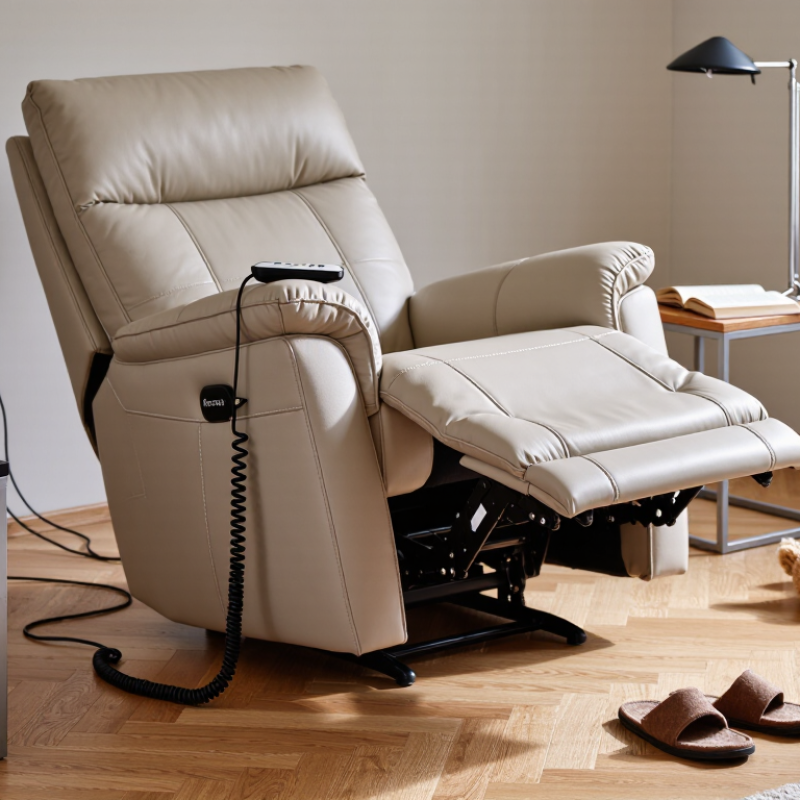
Power lift chairs combine a motorized recliner with a lifting mechanism. Pressing a handheld control activates an electric actuator beneath the seat. The actuator tilts the chair forward, helping a user stand with less knee and hip strain. Another control reverses the movement and lowers the user into a seated position. Movement is not risk-free. The chair may stop during a power outage, especially when its backup battery is missing or depleted.
The main hazards involve movement, electricity, and poor positioning. Scissors-like gaps near the footrest, seat frame, and lifting joints can pinch fingers, clothing, or skin. A chair placed too close to a wall may recline unevenly or press against furniture. Loose rugs can also catch the footrest. The World Health Organization reports that falls cause about 684,000 deaths worldwide each year, with adults over 60 facing the greatest fatal-fall risk. A lift chair cannot remove that risk.
Electrical inspection matters. Frayed cords, overloaded outlets, and blocked ventilation can create shock or overheating hazards. The National Fire Protection Association’s residential fire research links electrical distribution and lighting equipment to thousands of home fires annually. That category is broader than lift chairs, but the warning remains relevant. I would not treat a smooth motor sound as proof of safety. Check the cord, remote, frame, and emergency lowering procedure regularly. The CDC reports that more than three million older adults receive emergency treatment for fall injuries annually in the United States. Even a careful user can misjudge a moving chair.
| Safety Dimension | How the Chair Works or What Causes the Hazard | Potential Consequence | Risk Level | Recommended Safety Practice |
|---|---|---|---|---|
| Moving lift and recline mechanism | Electric motors or linear actuators move the footrest, backrest, and seat. Moving joints can create pinch or shear points. | Finger, hand, foot, clothing, or pet injuries. | Moderate | Keep hands, feet, children, and pets away from gaps and moving parts. Operate the chair only while seated and watching its movement. |
| Unexpected movement | A stuck, damaged, or accidentally pressed handset may activate the motor while a person is entering, leaving, or cleaning the chair. | Loss of balance, falls, or impact injuries. | Moderate | Release the control before standing, keep the handset within reach but away from children, and unplug the chair before servicing or cleaning underneath it. |
| Falls during transfers | The lift function raises and tilts the seat to help a user stand, but it does not replace stable footing, balance, or assistance when needed. | Falls, bruising, fractures, or other serious injuries. | High | Place the chair on a level, non-slip surface. Lock or stabilize it as designed, ensure the footrest is fully retracted, and seek assistance if standing is difficult. |
| Tipping or instability | Reaching sideways, standing on the footrest, placing excessive weight on an armrest, or using an uneven surface can shift the chair’s center of gravity. | Chair rollover, falls, or musculoskeletal injuries. | High | Do not stand on the footrest or sit on the arms. Follow the manufacturer’s weight limit and keep the chair on a firm, level floor. |
| Electrical shock | The chair uses a low-voltage power supply connected to household electricity. Damaged cords, plugs, adapters, or liquid exposure can create electrical hazards. | Electric shock, burns, or equipment failure. | High | Keep electrical parts dry, avoid extension cords unless specifically approved, and stop using the chair if the cord, plug, or power supply is damaged. |
| Overheating and fire | Blocked ventilation, overloaded outlets, damaged wiring, or a faulty power adapter can produce excessive heat. | Smoke, fire, property damage, or injury. | High | Do not cover the power supply, keep it off rugs where heat cannot escape, use a properly grounded outlet, and unplug the chair during long periods of non-use if instructed. |
| Battery backup hazards | Some chairs use a battery backup to return the chair to a safer position during a power outage. Batteries can leak, fail, or become depleted. | Failure to move, corrosion, overheating, or delayed exit from the chair. | Moderate | Use only the specified battery type, check it according to the care instructions, and do not rely on a backup battery as a substitute for routine charging or maintenance. |
| Entrapment and body positioning | A user may become trapped between the seat, footrest, armrest, or backrest, particularly when mobility or sensation is limited. | Pressure injuries, circulation problems, or difficulty breathing. | High | Maintain an upright, centered position, avoid sleeping in a fully reclined chair unless medically advised, and provide supervision for users with limited sensation or cognition. |
| Trips and cable obstruction | The power cord, transformer, or handset cable may cross a walking path or become caught under the chair. | Trips, falls, cable damage, or sudden chair movement. | Moderate | Route cables along the wall, keep them away from moving mechanisms, and inspect them after moving the chair or rearranging furniture. |
| Exceeding the rated load | Motors, frames, and lifting mechanisms are designed for a specified maximum user weight. Extra loads from pets, children, or objects can add stress. | Structural failure, motor damage, instability, or injury. | High | Confirm the chair’s rated capacity before use and never use the armrests or footrest as seats. |
| Poor maintenance or modification | Loose fasteners, worn components, unauthorized repairs, or altered wiring may affect the chair’s stability and controls. | Unexpected movement, mechanical breakdown, shock, or falls. | Moderate | Inspect the frame, cables, controls, and moving parts regularly. Have repairs performed by a qualified service professional and do not bypass safety features. |
| User-specific medical or functional risks | Limited balance, reduced sensation, cognitive impairment, or certain medical conditions may increase the danger of unsupervised operation. | Delayed response, improper positioning, falls, or prolonged pressure on the body. | High | Ask a healthcare professional or qualified occupational therapist for individualized guidance, especially when the chair is used for transfers, positioning, or extended sitting. |
General note: Power lift chairs are electrically powered seating devices that raise the seat and may recline the backrest or extend the footrest through motorized actuators. Always follow the specific operating, weight-capacity, electrical, and maintenance instructions supplied with the chair.
It is a motorized recliner with a lifting mechanism. A handheld control raises the seat, helping the user stand.
An electric actuator beneath the seat tilts the chair forward. Reversing the control lowers the user gently into a seated position.
No chair removes every fall risk. Stand only after the chair reaches its fully upright position.A clear pathway helps.
Pinch points may appear near the footrest, seat frame, and lifting joints. Keep fingers, toes, clothing, cords, children, and pets away.Small gaps still matter.
Place it on a level floor with clear space around it. Keep the backrest away from walls and furniture.Loose rugs may catch the footrest. Check the floor before each use.
Stop using the chair after noticing frayed cords, exposed wires, warm plugs, flickering controls, or burning smells.Disconnect power before cleaning underneath. Do not open the motor housing without proper technical knowledge.
The chair may stop moving, especially without a working backup battery. Learn the emergency lowering procedure before an outage occurs.Do not force the chair.
Listen for grinding, clicking, rocking, or uneven movement. These signs may indicate worn gears, loose fasteners, or actuator problems.A smooth motor sound does not prove safety. I might overlook that detail.
Sit with your back against the backrest and both feet supported. Keep the pathway clear and avoid leaning over the armrest.Wait for full movement to stop. Hurrying can turn a helpful chair into a fall hazard.
Power lift chairs are motorized recliners designed to help users transition safely between sitting and standing. They use an electric motor and remote control to raise the seat, adjust the backrest, and sometimes elevate the legs. However, what are the safety hazards of power lift chairs? Potential dangers include electrical faults, damaged cords, motor failure, unstable movement, and mechanical problems caused by poor maintenance or incorrect assembly.
Users may also face falls, entrapment, pinched fingers, or injuries from improper positioning, especially when the chair is moving. These risks can be greater for older adults and people with limited strength, balance, vision, or mobility. To use a lift chair safely, place it on a stable, level surface, keep cords away from walkways, follow the operating instructions, inspect it regularly, and never allow children or pets near moving parts. Users should also sit fully back in the chair, avoid exceeding its weight capacity, and seek assistance when transferring if necessary.

 Atar Furniture