Fabric functional sofas promise comfort, flexibility, and easier everyday living. Yet their woven surfaces can trap coffee, skin oils, pet hair, and food particles between tightly packed fibers. Reclining joints and seat folds create darker contact zones. The problem is rarely the fabric alone. Moisture, heat, cleaning residue, and delayed treatment often work together.
Grand View Research’s 2024 Upholstery Fabrics Market Analysis highlights continuing demand for durable and performance-oriented upholstery. However, “durable” does not mean permanently stain-proof. AATCC TM 130, the industry’s oily-stain release test, also shows why fabric performance depends on the stain type and cleaning method. Water-based spills may spread outward, while oil-based marks can bond more deeply. The numbers are useful, but home conditions remain messier than laboratory testing.
Mary Gagliardi, Clorox’s in-house scientist and cleaning expert, advises, “The sooner you treat a stain, the better.” That simple sentence matters. Blotting fresh coffee with a white cloth can prevent a wider brown ring. Rubbing may push the liquid deeper. Before searching for how to remove stains from fabric functional sofas, check the care label, fabric composition, and manufacturer’s cleaning code. Test any solution behind the sofa first. Even careful cleaning can leave a faint texture change, especially on velvet-like or brushed fabric. I would not promise a perfect result every time. A safer goal is controlled improvement, not aggressive scrubbing. This guide explains why these sofas stain, which mistakes make marks worse, and how to remove them without damaging the fabric or the sofa’s moving functions.
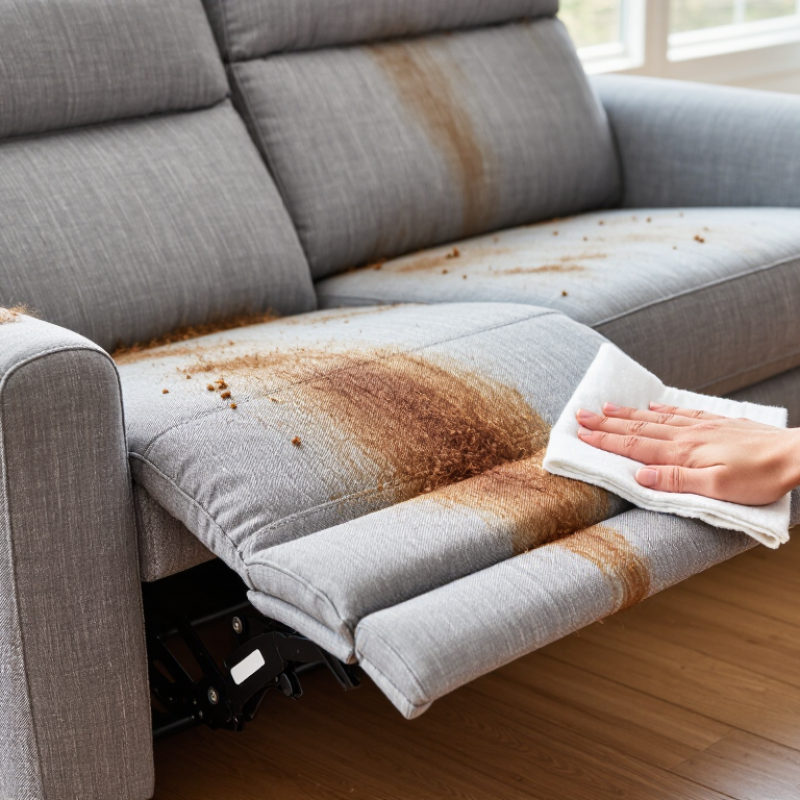
Functional fabric sofas look protected, but their performance is not unlimited. Their woven surfaces contain tiny gaps that can hold coffee, cooking oil, skin oils, and dusty particles. Textured yarns create more contact points than smooth upholstery. Moving sections, folds, and seams can also collect crumbs and moisture.
Professional testing explains the confusion. AATCC TM22 measures water repellency on a 0–100 spray-rating scale. However, a high water score does not prove oil resistance. AATCC TM130 rates oily stain release from 1 to 5, with 5 indicating better release. These tests measure different risks. A sofa can resist a water splash yet absorb greasy fingerprints. I once assumed “performance fabric” meant stain-proof. That assumption was too simple.
Heat, friction, and delayed cleaning make marks harder to remove. Body heat can soften oily residue inside the yarn surface. Rubbing then spreads it across a larger area.
Blot fresh spills with a white, absorbent cloth. Avoid colored towels, aggressive brushes, and excessive water near moving mechanisms. Use a mild upholstery cleaner only after checking the care label and testing a hidden patch.
For dried oil, repeated gentle blotting may work better than one harsh treatment. It gets worse. Some finishes gradually lose effectiveness after abrasion and unsuitable cleaning, so professional fabric testing cannot predict every household stain.
Fabric functional sofas stain because their woven surfaces trap oils, dust, and spilled liquids. Moving parts can also create pressure points where grime becomes embedded. Different stains need different responses, not one universal cleaner.
Oil stains from food or skin often spread into a dark, soft-edged mark. Blot with a dry cloth, then use a small amount of mild detergent diluted in water. Protein stains, such as milk or sauce, may smell when moisture remains inside the padding. Remove them quickly and dry the area with airflow. Mud should dry first. Scraping wet mud can push particles deeper. Ink and strongly colored drinks are more difficult because their dyes may bond with synthetic fibers. Use repeated blotting, never aggressive rubbing. The stain may fade slowly.
I once used too much water on a sofa cushion and created a larger water ring. That mistake changed my cleaning routine. Always check the care label and test a hidden seam first. A clean white cloth helps reveal transferred color. Performance fabrics often resist liquid, but resistance is not immunity. Natural fibers may absorb stains faster, while tightly woven synthetic fabrics can hold oily residue on the surface. Functional sofas need extra caution around hinges, motors, and control panels. Keep liquid away from those areas. No method is flawless. Even careful cleaning can slightly change texture or color, so professional fabric care is sensible when the stain reaches deep padding.
Why Do Fabric Functional Sofas Stain and How to Remove Them?
Before removing a stain, prepare the fabric sofa carefully. Functional sofas have moving sections, seams, and narrow gaps that can trap crumbs and liquid. Check the care label before using any cleaner. Some fabrics tolerate water, while others may develop rings, fading, or distortion.
Remove cushions and open the reclining or extending parts safely. Vacuum the surface, seams, and mechanism gaps with a soft attachment. Use a dry white cloth to lift loose dirt. Do not rub the stained area. Rubbing can push oil, coffee, or food deeper into the fibers. Test a small amount of cleaner on a hidden seam, then wait until it dries. This step matters. I have seen harmless-looking solutions leave pale patches after drying.
Tips: Blot spills from the outside inward. Use minimal moisture. Place a clean towel beneath removable covers. Keep the sofa ventilated, but avoid strong direct heat. If the fabric becomes soaked, stop and seek professional advice. Some preparation steps feel slow, yet they prevent a larger repair. Even careful cleaning may not remove an old stain completely. That is worth accepting before stronger treatment begins.
| Preparation or Cleaning Dimension | What to Check or Do | Why It Matters | Recommended Practice | Common Risk to Avoid |
|---|---|---|---|---|
| Identify the upholstery fabric | Read the care label and identify whether the cover is removable, washable, water-cleanable, solvent-cleanable, or dry-clean-only. | Different fibers, backings, coatings, and dyes react differently to moisture and cleaning agents. | Follow the care code before selecting a cleaning method. | Using water on a solvent-only fabric may cause rings, dye transfer, shrinkage, or backing damage. |
| Understand common care codes | W means water-based cleaning; S means solvent-based cleaning; W/S allows either method; X indicates vacuuming or professional cleaning only. | The code provides the safest general direction for moisture and product selection. | If the label is missing or unclear, test cautiously and seek professional advice for valuable upholstery. | Do not assume that a removable cover is machine-washable; the fabric and backing may still require special care. |
| Locate the stain source | Determine whether the mark is from food, a drink, oil, ink, cosmetics, soil, pet residue, or an unknown substance. | Stain composition affects product choice, dwell time, and the risk of spreading or setting the mark. | Treat fresh spills as soon as practical, after removing loose solids. | Rubbing an unknown stain can force it deeper into the fibers and enlarge the affected area. |
| Remove loose debris | Vacuum crumbs, dust, pet hair, and dry soil using a suitable upholstery attachment. | Dry particles can turn into muddy residue when mixed with liquid cleaner. | Vacuum the entire cushion and surrounding panel, not only the visible spot. | A narrow nozzle or excessive suction may pull loose threads or damage delicate fabrics. |
| Remove excess liquid or solids | Lift solids with a spoon or dull edge; blot liquid with a clean, absorbent white cloth. | Removing material at the surface reduces the amount that can migrate into the cushion. | Work from the outer edge toward the center and replace the cloth as it becomes soiled. | Scraping aggressively or pressing hard can spread the stain and distort the weave. |
| Check colorfastness | Apply a small amount of the planned cleaner to a hidden seam or underside area. | Some dyes bleed, fade, or change shade when exposed to moisture, heat, or chemicals. | Blot the test area with a white cloth and inspect it after drying. | Visible color transfer or texture change means the product should not be used on the stain. |
| Protect nearby materials | Move or cover wooden legs, metal fittings, flooring, cushions, and adjacent upholstery. | Moisture and cleaning solutions can mark wood, corrode metal, or transfer dye to other surfaces. | Use clean towels or a waterproof barrier beneath and around the treatment area. | Leaving wet fabric against a wood frame can contribute to staining or moisture damage. |
| Prepare cleaning tools | Gather white microfiber cloths, a soft brush if permitted, a measuring container, gloves, and clean water where appropriate. | Prepared tools help control product quantity and reduce lint, dye transfer, and cross-contamination. | Use white, colorfast cloths and separate cloths for applying and blotting. | Colored towels may release dye onto light upholstery. |
| Control the amount of moisture | Use only the amount of liquid needed to dampen the treatment area according to the care instructions. | Excess moisture can penetrate foam, leave water rings, prolong drying, and encourage musty odors. | Treat small sections instead of saturating the entire cushion. | Soaking the cushion may create a larger hidden problem than the original surface stain. |
| Plan the treatment direction | Begin at the outside of the mark and move gradually toward the center. | This limits outward migration and reduces the chance of forming a larger ring. | Use gentle blotting rather than vigorous rubbing. | Circular scrubbing can roughen the nap and make the cleaned area visibly different. |
| Allow proper drying | Create airflow and keep the sofa unused until the treated area is fully dry. | Slow drying increases the chance of water marks, odor, and moisture remaining inside the cushion. | Open windows or use a fan without applying excessive heat directly to the fabric. | High heat may shrink fibers, set some stains, or affect adhesives and synthetic coatings. |
| Know when to stop | Stop if dye bleeding, fabric distortion, strong odor, spreading, or a persistent mark appears after a careful attempt. | Repeated treatment can weaken fibers and make a localized problem more extensive. | Use a professional upholstery cleaner for unknown, old, large, oily, ink-based, or deeply absorbed stains. | Mixing household chemicals or applying bleach, strong solvents, or abrasive powders can permanently damage upholstery. |
Functional fabric sofas resist moisture, but they are not completely stain-proof. Food oils, coffee, makeup, and dusty hands can settle between the fibers.
Textured upholstery holds particles more easily than smooth fabric. Repeated rubbing may also push a mark deeper.
In my experience, quick action usually causes less damage than aggressive cleaning.
Check the care label before treating any area. Test your cleaning mixture behind the sofa first.
Remove solid residue with a blunt spoon. Then blot the stain with a dry, white cloth. Never scrub immediately.
Mix lukewarm water with a few drops of mild detergent. Dampen another cloth lightly, and work from the outer edge toward the center.
Use gentle, short presses. Avoid soaking the cushion, because trapped moisture can create odors or water rings.
Blot with clean water afterward, then improve airflow while the fabric dries.
Greasy marks may need two careful treatments. A faint ring can remain after the first attempt, which means the method or moisture level needs reconsideration.
Functional sofa fabric can resist light spills, but it is not completely stain-proof. Coffee, cooking oil, skin moisture, and dusty clothing can leave marks over time. Frequent rubbing may also push dirt deeper into the fibers. I once ignored a small juice spot overnight, and the dried edge became harder to remove.
Act quickly. Blot fresh liquid with a clean, white cloth. Do not scrub, because friction can spread the stain and roughen the surface. Follow the sofa’s care label before using any cleaner. Test a small hidden area first. For many water-based marks, use mild soap diluted with water, then blot with a damp cloth. Avoid soaking the cushion. Excess moisture may create rings or encourage odor. For oil-based stains or large marks, professional upholstery cleaning is safer.
Tips: Vacuum the sofa weekly, especially along seams and under cushions. Keep drinks on stable tables, not armrests. Use a breathable, washable throw in busy areas. Wash it regularly. Ask household members to remove dusty outdoor clothing before sitting. Keep pets’ paws clean, too. Sunlight can fade fabric, so position the sofa away from strong direct rays when possible. Prevention is not perfect, and I sometimes miss a spill, but quick attention usually limits the damage.
No. Their woven surfaces can hold coffee, cooking oil, skin oils, crumbs, and dust.
Textured yarns create more contact points. Tiny gaps can trap oily residue and fine particles.
Not necessarily. Water repellency and oily stain release measure different performance risks.
Blot it quickly with a clean, white, absorbent cloth. Do not scrub. Act fast.
Friction can spread the mark and push dirt deeper into the fibers. It may also roughen the surface.
Try repeated gentle blotting instead of one harsh treatment. For large or stubborn marks, seek professional upholstery cleaning.
Check the care label first. Test a hidden patch, then use mild diluted soap without soaking the cushion.
Vacuum weekly around seams and beneath cushions. Keep drinks on stable tables, use a washable throw, and clean dusty clothing before sitting.
No. Heat, abrasion, and unsuitable cleaners can reduce their effectiveness. My earlier “stain-proof” assumption was too simple.
Functional fabric sofas combine comfort, adjustable features, and practical design, but their moving parts, textured surfaces, and frequent contact with skin, food, drinks, and pets can make them especially vulnerable to stains. Different marks require different care: liquid spills may spread quickly, grease can cling to fibers, and dark or colored substances may leave visible residue. Before cleaning, remove loose debris, check the care instructions, test a small hidden area, and prepare clean cloths, mild detergent, and cool or lukewarm water.
Learning how to remove stains from fabric functional sofas starts with acting quickly and blotting rather than rubbing, which helps prevent the stain from moving deeper into the fabric. Treat water-based marks with gentle diluted soap, use a suitable fabric-safe method for oily stains, and handle older stains gradually instead of applying excessive moisture. After cleaning, remove soap residue, allow the sofa to dry completely, and keep its functional mechanisms dry. Regular vacuuming, protective covers, careful eating habits, and prompt spill treatment can help preserve the sofa’s appearance and reduce future staining.
