China Top Bluetooth Speakers for Theater Couch Setup

Time:2026-11-01 Author:Madeline
0%

A theater couch should make movie night feel immersive, not leave you leaning toward a distant speaker. China’s Bluetooth speaker market offers compact models, portable designs, and powerful options for home entertainment. The right choice depends on your room, television, listening habits, and budget. Small details matter.

This guide explores what to look for in Bluetooth speakers for a theater couch setup, including clear dialogue, balanced bass, practical controls, and reliable connections. It also explains how to hook up bluetooth speakers on a theater couch, from checking your TV’s Bluetooth support to pairing devices and testing sound from your usual seat. Connection steps can differ between televisions, so check the manufacturer’s instructions rather than assuming every menu works the same way.

Before buying, consider Bluetooth audio delay, available inputs, speaker placement, and whether the system needs a separate subwoofer. A model that sounds impressive in a shop may feel overpowering beside a small couch. Not every feature helps. If possible, compare dialogue and action scenes at normal listening volume, and confirm the return policy before ordering. Product specifications are useful, but they cannot fully predict how a speaker will sound in your room. A little trial and adjustment may be needed.
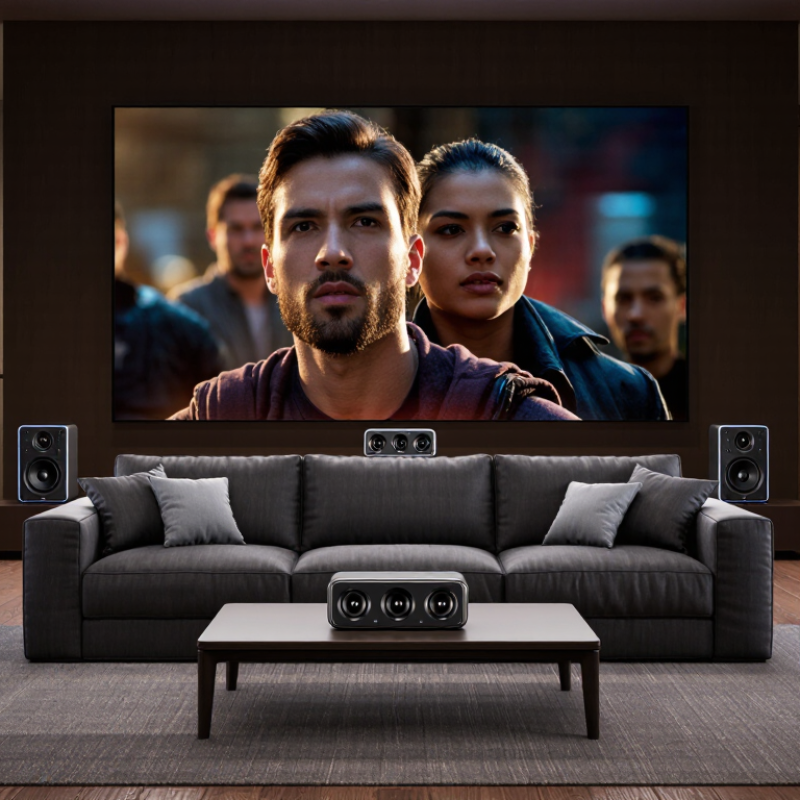
China Top Bluetooth Speakers for Theater Couch Setup

Define Couch-Theater Needs: 2.0 Stereo, 2.1 Bass, or a Speaker Pair

For a couch-theater setup, choose the speaker layout around what you actually watch and hear. A 2.0 system uses two channels for left and right sound, giving dialogue and effects room to spread across the screen. It suits smaller rooms, clear speech, and music between films. Place the speakers near the screen, angled slightly toward the sofa. If they sit far apart, voices can seem detached from the picture. That matters.

A 2.1 setup adds a subwoofer for deeper bass. It can make low musical notes and on-screen rumbles feel fuller, but a small room may exaggerate them. Try the subwoofer beside a wall, then listen from the couch; corners can make bass uneven. A stereo speaker pair may offer a wider soundstage, but check whether the pair supports synchronized playback and stereo output from your device. Bluetooth features vary, and delay can make dialogue feel out of sync. Not always.

Think about late-night volume, too. Strong bass travels through floors and walls more easily than speech. If you mostly watch dialogue-heavy shows, balanced 2.0 speakers may be easier to place and tune. If action films are your main event, 2.1 may suit you better. It is tempting to chase the biggest bass, but comfort from the actual couch matters more than a dramatic demo in a shop.

Choose the Right Bluetooth Speaker Layout for a Couch-Theater Setup

A conventional 2.0 setup uses two main speakers; a 2.1 setup adds one subwoofer for bass. A matched speaker pair is simply a two-speaker way to build a 2.0 system, not a separate channel format. Actual bass performance depends on speaker design, room acoustics, and placement.

Compare China-Made Models with IEC 60268-5 Loudspeaker Test Criteria

For a theater couch setup, a Bluetooth speaker’s published measurements can reveal more than its cabinet size or advertised wattage. IEC 60268-5 provides standardized methods for measuring loudspeakers, including frequency response, sensitivity, impedance, and power handling. Compare test results taken under similar conditions; otherwise, numbers may look precise but tell little.

Listen for even dialogue across the couch. A sharp “s” should not sting, and a quiet line should remain clear when the room’s air conditioner is running. IEC measurements can help compare China-made models, but they do not guarantee a good seat-to-seat experience. Room placement matters. The standard does not assess Bluetooth stability, codec behavior, or your room’s reflections. Check whether a report identifies the measurement setup, frequency range, and test conditions, rather than relying on a single peak wattage figure. A result measured on-axis may not describe what a listener hears off to the side. That gap is easy to overlook. If possible, audition the speaker at couch distance, with dialogue and music, then adjust its position before judging the tonal balance.

China Top Bluetooth Speakers for Theater Couch Setup — Compare China-Made Models with IEC 60268-5 Loudspeaker Test Criteria

Brand-Neutral Speaker Profile Couch-Theater Fit Practical Comparison Relevant IEC 60268-5 Measurement Model-Specific Result
Compact powered stereo pair Suitable for a small-to-medium seating area when the left and right speakers can be placed apart and aimed toward the listening position. Separate enclosures can provide left-right separation; placement and room reflections affect the result. Check whether Bluetooth supports the intended stereo configuration. Frequency response, characteristic sensitivity, rated impedance where applicable, and power-handling capacity. Not supplied
No specific model or independent test report was provided.
Bluetooth soundbar-style speaker Convenient below a television when a simple, single-enclosure setup is preferred. Requires less placement space than separate speakers. Stereo width and bass performance depend on the design and listening room; do not infer them from enclosure size alone. Frequency response and sensitivity under the stated test conditions; power-handling capacity where declared. Not supplied
Published figures should be checked against the exact model and test conditions.
Powered stereo bookshelf pair Suitable when the couch setup has stable stands or shelves beside the television area. Offers flexible left-right placement, but requires space and appropriate power connections. Bluetooth capability and speaker-to-speaker linking vary by model. Rated impedance, frequency response, characteristic sensitivity, and power-handling capacity, as applicable to the system. Not supplied
Results require measurements for the exact speaker model.
Portable single Bluetooth speaker Best suited to flexible placement or casual listening near the couch rather than a wide stereo presentation. Simple to move and typically self-contained. A single enclosure does not provide the same physical left-right separation as a properly spaced stereo pair. Frequency response, characteristic sensitivity, and power-handling capacity; test configuration should be stated. Not supplied
Battery operation and DSP settings should be documented during testing.
IEC 60268-5 comparison note IEC 60268-5 provides methods for measuring loudspeaker characteristics. It does not, by itself, rank Bluetooth speakers or set one universal “pass” value for every couch-theater use case. Report the measurement method, operating conditions, and units alongside each result. Commonly relevant characteristics include impedance, frequency response, sensitivity, and power handling. Test report required
Do not treat unverified manufacturer claims or illustrative values as IEC test results.

Data integrity note: This is a brand-neutral comparison framework, not a verified ranking of individual China-made products. No model-specific measurements are shown because no exact models or IEC 60268-5 test reports were identified.

Check Bluetooth SIG A2DP Stereo and SBC Sampling Rates up to 48 kHz

For a theater couch setup, check the speaker’s Bluetooth profile, not just its advertised sound. Bluetooth SIG A2DP is designed to carry stereo audio from a source device to a speaker. SBC is the baseline codec for A2DP, and supported sampling rates can include 16, 32, 44.1, and 48 kHz. That does not mean every phone, television, and speaker will use 48 kHz. Both ends must support the setting, and the connection may choose another rate.

Look for SBC support at 48 kHz in the speaker specifications, then confirm what the source device sends. A movie soundtrack at 48 kHz may be resampled during playback; the number alone cannot promise clearer dialogue or stronger bass. Check the listening distance, too. A couch several metres away, with a television cabinet between devices, can make a stable connection less reliable. Keep the speaker’s status indicator visible during a test.

Listen to a familiar scene with quiet speech and sudden effects. Does dialogue stay centered, or does stereo placement feel uneven? Bluetooth A2DP can also introduce delay, so compare speech with lip movement before settling in. It may be fine. It may not. I would not assume a sampling-rate label tells the whole story; room reflections and speaker placement matter, and quick showroom tests can miss both.

Assess 2.4 GHz Link Stability, Codec Latency, and TV Compatibility

A theater couch setup can feel seamless until sound drops during a quiet scene. Bluetooth shares the crowded 2.4 GHz band with many household devices. Place the speaker where the TV has a clear path to it, rather than behind a metal cabinet. Keep a little distance from a Wi-Fi router when possible. Then test from your usual seat. Stability in the showroom means little if the connection stutters at home.

Latency deserves a real viewing test. A delayed consonant is easy to notice, even when the picture looks sharp. TV and speaker must support a compatible Bluetooth audio codec; otherwise, they may fall back to a basic option. Codec support alone does not guarantee lip-sync accuracy. Play dialogue, then check the TV’s audio delay setting and adjust in small steps. Some televisions add delay when processing surround effects, so simpler audio modes may help.

Check the TV’s audio menu before choosing a speaker. Some sets send Bluetooth audio but disable their built-in speakers at the same time. Others allow both, though the result can sound slightly echoed. It is a small, annoying detail. Also confirm whether the TV reconnects automatically after power-off. One weakness in many setups is that menus describe compatibility vaguely; a short test with your own TV remains more useful than a feature list.

Rank Top China Bluetooth Speakers by Output, Battery, Placement, and Value

For a theater couch setup, compare China-made Bluetooth speakers by measured output, not wattage printed on the box. Bluetooth SIG’s 2024 Market Update forecasts 1.8 billion annual Bluetooth audio-streaming device shipments by 2028, showing how crowded this category has become. That makes consistent testing essential. Check loudness at the couch, speech clarity during quiet scenes, and distortion during action sequences. A speaker that sounds powerful up close may lose impact across a room. Placement matters, too: leave space around the cabinet, and avoid tucking it behind cushions or inside a shelf.

Battery claims need context. Test at a fixed volume, since loud playback and bass-heavy scenes can shorten runtime. Compare measured hours with the maker’s stated figure, and treat small differences cautiously. A compact unit may suit a side table, while a heavier model may deliver fuller sound but become awkward to reposition. For value, weigh price against output, tested battery life, connection stability, and the controls you will actually use. Bluetooth SIG tracks shipments, not listening quality; that distinction is easy to overlook. My ranking would favor balanced room-filling sound and honest runtime over peak volume alone. It is not perfect: room size and wall materials can change results, so compare speakers in your own seating area when possible.

FAQS

What does A2DP tell me about a speaker?

It supports stereo audio from a source device. That’s useful, but not a sound-quality guarantee.

Does SBC support 48 kHz audio?

It can support 48 kHz, along with 16, 32, and 44.1 kHz. Both devices must support the same rate.

Will 48 kHz always make dialogue clearer?

No. The source may resample audio, and the rate alone cannot promise clearer speech or stronger bass.

How can I check whether wireless audio suits my couch setup?

Play a familiar scene with quiet speech and sudden effects. Watch the speaker’s status light, too. Test from your usual seat.

How do I spot audio delay?

Compare spoken words with the actors’ lip movements. A small delay can still feel distracting.

Where should I place a speaker for fuller sound?

Leave room around its cabinet. Avoid shelves, cushions, and spots behind furniture. A few metres can matter.

How should I compare speaker output and battery life?

Listen at the couch, then check speech clarity and distortion during loud scenes. Test battery life at a steady volume. Not flawless, but more useful than box claims.

What makes a speaker good value for a room?

Consider tested runtime, stable connections, useful controls, and sound across the room. Wall materials can change the result. A quick shop test may miss that.

Conclusion

A comfortable theater-couch setup starts with choosing the right sound layout: a 2.0 stereo pair for clear left-and-right effects, a 2.1 system for added bass, or a matched speaker pair for flexible placement. This guide explains how to hook up bluetooth speakers on a theater couch, including how to position them for an even listening experience and what to consider when connecting them to a television. It compares China-made options using relevant loudspeaker test criteria from IEC 60268-5, while noting that published test results and listening conditions can affect comparisons.

The guide also checks Bluetooth SIG A2DP stereo support and SBC sampling rates up to 48 kHz, then considers 2.4 GHz connection stability, codec-related delay, and TV compatibility. Its final ranking weighs practical output, battery life, placement flexibility, and value, helping readers select speakers that suit their room, viewing habits, and budget.

Madeline

Madeline

Madeline is a dedicated marketing professional with a wealth of expertise in our company's core offerings. With a keen understanding of the industry, she brings a unique perspective to her role, consistently delivering high-quality content that highlights the superior aspects of our products. As......